Sunday, 6 October 2019

The boxes are leaking

Have I shared with you my really super excellent method of coping with everything? I can’t remember. But considering this past week I've already lost my car keys twice ( found!) and bank card ( no idea) that's hardly surprising. For those of you who don't know my amazing none-therapist-endorsed method of dealing with all of life’s shit it’s basically me placing those memories, thoughts, or issues in metaphorical boxes then filing them away on a shelf somewhere in my brain. I avoid opening said boxes at all costs. Or maybe open one in isolation under controlled conditions ( or with one of those remote controlled robots used for suspicious packages) if lifting the lid is completely unavoidable. 

Traumatic labour? In a box

Bad news about Nate? In a box ( several needed) 

Filing for bankruptcy? In a box

Losing home, possibly not having anywhere to live? In a box

Child turning blue? In a box 

Frustrated at the system? Readily accessible box

Gave child hereditary x linked condition? BOX!!!

No respite? Put firmly in a box, pretend to be managing. 

Fool that I am my imaginary boxes are constructed of cardboard, rather than something a bit sturdier, like, I don't know, metal. Stupid brain. These boxes are neatly arranged on shelves straight out of those scenes in the X Files or police dramas where the evidence is stored away in dusty rooms and monitored by some doddery old dude. My shelves are pretty full. Actually the whole storage room is chocka. 
I've now had to add a box of shock and grief following the sudden and unexpected death of my Dad to one of the shelves. I'm not going to talk about his death. I just can't. But this overfilled and heavy box has had to be shoved in between the other boxes. It's been jammed in, squishing it's neighbours, causing strain and tears, and now all of my boxes are leaking. 

I am aware that this probably isn't the healthiest coping method. I really am. However without this compartmentalization how can I function? 

The thing about a close death is that it makes you think. You begin to strip down and analyse every part of your own life and reorder your priorities ( if any reordering is required). Death, ultimately, has become more real. I spent my younger years feeling pretty invincible, and felt that my parents were too.

But no one is. 

Running alongside the pain and grief is the absolute head fuck that is the contemplation of your own mortality and that of those closest to you who remain, so it's pretty unsurprising that all of my boxes are leaking. 

Send towels.

Addition: 
( thank you for the offers of hugs, wine, sellotape, blue tack, and Tupperware 😘) 


Sunday, 1 September 2019

September’s here

Oh thank fuck. 

Thank fuckety fuck for that. 

The summer is done. Gone. Over. 

It’s time for the kids to go back to school, and I can go back to work for a rest. 

Truthfully we have had a decent summer. Nate hasn't needed any hospital stays although he had blood in his stomach, a UTI, and had a run of ”stoppy breathies” which self resolved ( although blue is now not a favourite colour of mine). I’ve had a lovely time with the kids and Freddie. But there comes a time when I’m ready for a break. 

We managed our trip to London even with my anxiety levels through the roof. I was informed somewhat unhelpfully by my husband that the process of sorting and packing ” is only as stressful as you let it be”.   You may me surprised to learn that I didn't poke his eyes out with a fork. Tempting though it was. 


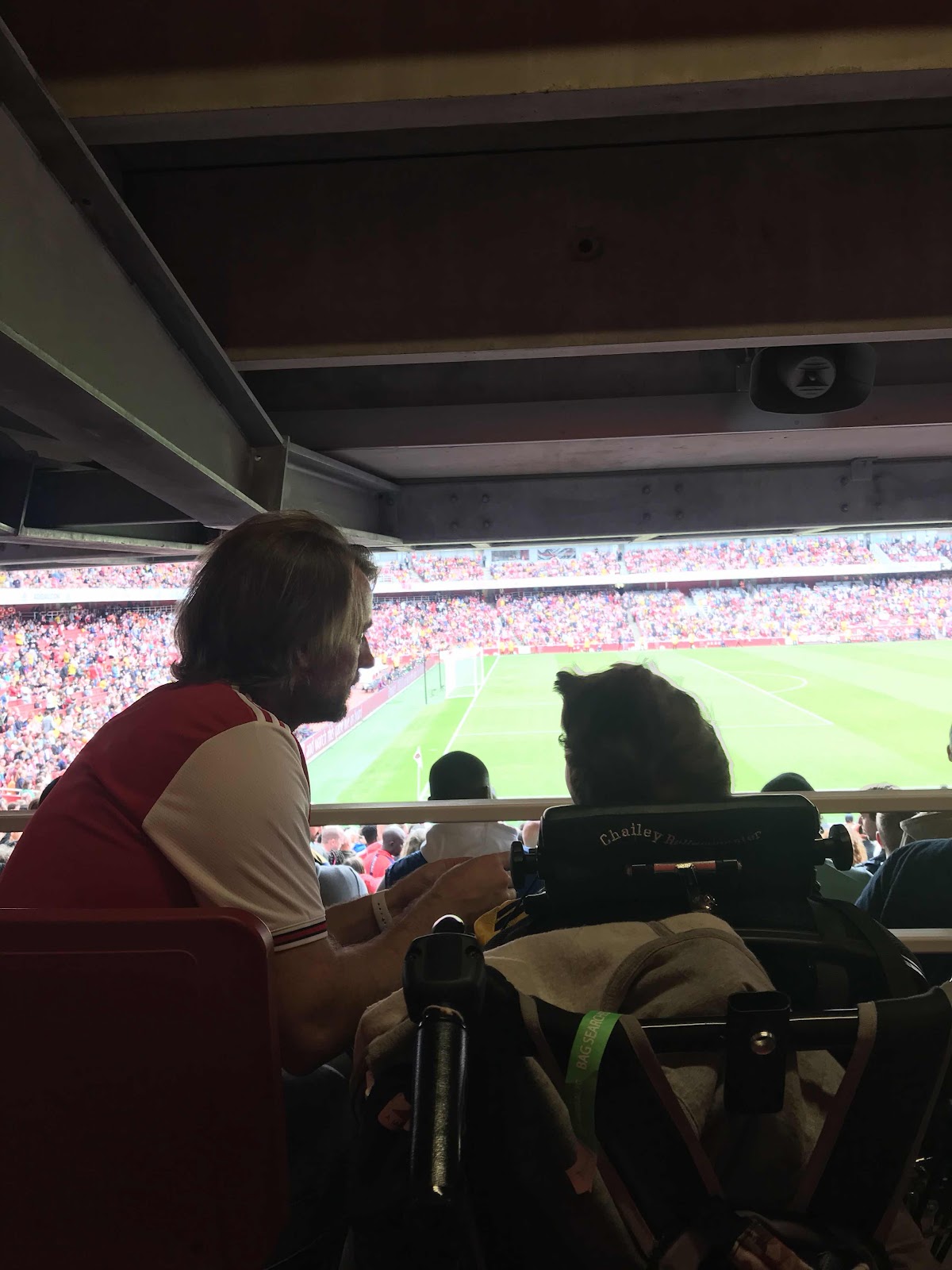
Nate enjoyed a boat trip down the Thames, and his first football match. We were very well looked after at Arsenal and had a good spy at the really expensive level while finding their Changing Places toilet. I absolutely did not start crying at the sight of Nate and Michael, and Thea and Michael watching football together. 


Shit there's something in my eye again. 

My daughter says the summer holidays flew by. Well yes that's what happens when you’re booked on 4 weeks worth of sports camps. There's only so much eye rolling one mother can take. 

We've had some days out, and some days in. Nate met up with some of his friends from school, and we fitted in rebound and hydrotherapy sessions at school which were brilliant. 


Oh and  I may or may not have read 47 books ( I can multi task)  **most on kindle unlimited, or on offer I hasten to add for Michael’s benefit! **

However, the one thing we weren't able to do this holiday is to spend some quality time with our daughter. We usually take her away while Nate is at respite, but as you know unfortunately we aren't able to access any respite at the moment. We heard before the holidays that we are looking at another 6-9 month wait. I'm not going to lie, it was quite a blow. I may joke, and I am aware that I can be incredibly blase about some pretty horrible situations but I do struggle at times. Luckily netball helps. 

Nothing quite like an elbow to the eye to take your mind off everyday shit. 


As a couple we have been hitting our local every week for the pub quiz. Quality coupley time that isn’t it. Mind some really bloody random questions are thrown out every week and sadly my knowledge of music from the 60s ( amongst other facts) is a bit lacking. I also didn't know the name of a tiny bone in the skull the other week which led Michael to question my career in science and education in general. FFS. Never ends in an argument honestly...

I have written before about continuity of care and how especially important this is for complex individuals so we were disappointed to find out that Nate’s social worker had left. Then, more recently, we learned Nate’s neurologist (who first met him when he was days old) no longer works at the hospital. Gutted. 
The first job of September will be to make contact with the new social worker. Poor woman. Although she hasn't got off to the best start by sending her ”hello I’m your new social worker” letter to the wrong address. 

I now look forward to my traditional “ lack of sleep before the first day back at school” night safe in the knowledge that tomorrow I can have a wee without the dog following me into the bathroom. Creepy little git. 


Friday, 19 July 2019

The summer

I greet the end of the school year with equal amounts of trepidation and excitement. While naturally I look forward to 6 weeks of no work and spending time with my children (and Fred) long holidays throw up their own unique challenges when you parent a child with PMLD and complex health needs.
It used to be so simple. Nate in a pram or pushchair. Then in small special needs pushchair but still able to fit on a baby change table, or be lifted onto the back seat of the car to be changed. My daughter eager to be out and about exploring, discovering, and playing while Nate roared his approval out in the fresh air. 


Then they both grew up. Nate is now a whopping 32kg and back breaking impossible to move from his chair, and my daughter is keen to spend time with her friends or be playing sport. The majority of our prior summer days out or time away were geared towards keeping our daughter entertained, and we had a list of fully accessible local attractions, several with changing rooms which meant we could stay longer knowing we could meet Nate’s care needs. But now? What is there to do with Nate? Seriously. I'm loath to be stuck in the house and have vowed to make it out somewhere with Nate ( and drag his sister along, with maybe Fred too) at least once per week. As you can see I'm keeping my expectations appropriately low ( so as to ensure their achievability), and we plan to meet up with Nate’s friends from school at various places around the North East rain or shine, which we are looking forward too. 

Although history does suggest that at some point it is inevitable that our plans will go tits up. 


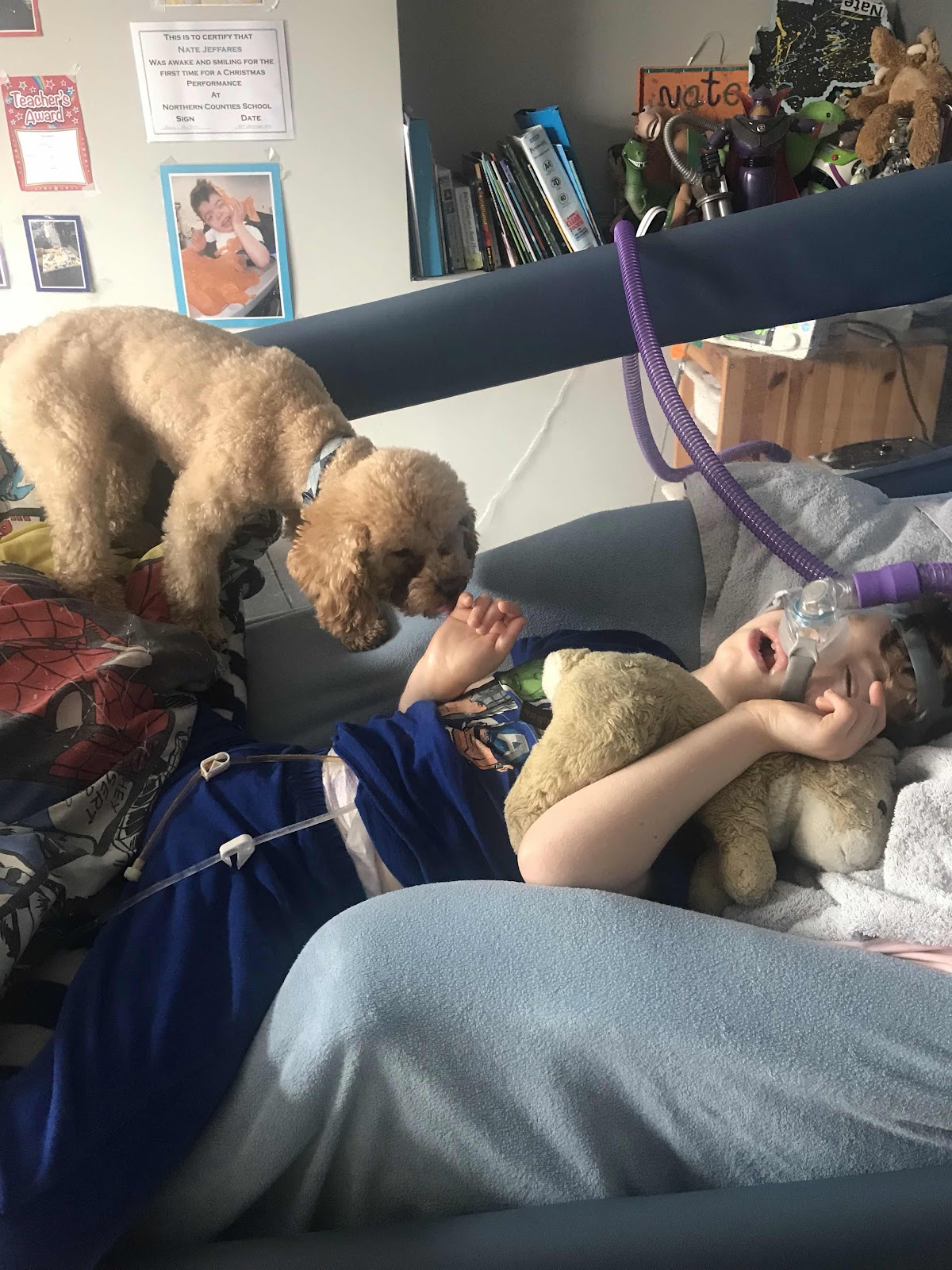
As a family we are hoping for a few days in the capital ( ssssh don't tell Nate in case he gets any dodgy health ideas ) and as a friend pointed out ” there are plenty of hospitals”. Limiting factors to overnight stays involve the requirement of a fridge for feed and meds, space to wash and dry all the syringes, managing in a normal bed, additional space for; oxygen concentrator ( and backups), ventilator, humidifier, sats monitor and feed pump. Oh and how will I blend food for Nate? I shall be giving my best smile in restaurants I can tell you that. 

We are going to attempt to get Natie to his first football match, and as Arsenal have a changing places toilet and sensory room it seems like it might be possible. The downside of booking tickets for a wheelchair user is that apart from the ”carer” they dont seem to accommodate the rest of their family or friends, so Michael is hoping to get seats allocated nearby. 


Well it's worth a try. 

Sunday, 9 June 2019

What would the emoji look like for how I’m feeling?

Really though, what would it look like? 

I suspect my face as I write this is a weird mix of frustration, annoyance and anxiousness, topped up with a touch of fear. So poo emoji then? Head exploding? Tearful? Face palm? Or all of the above? 

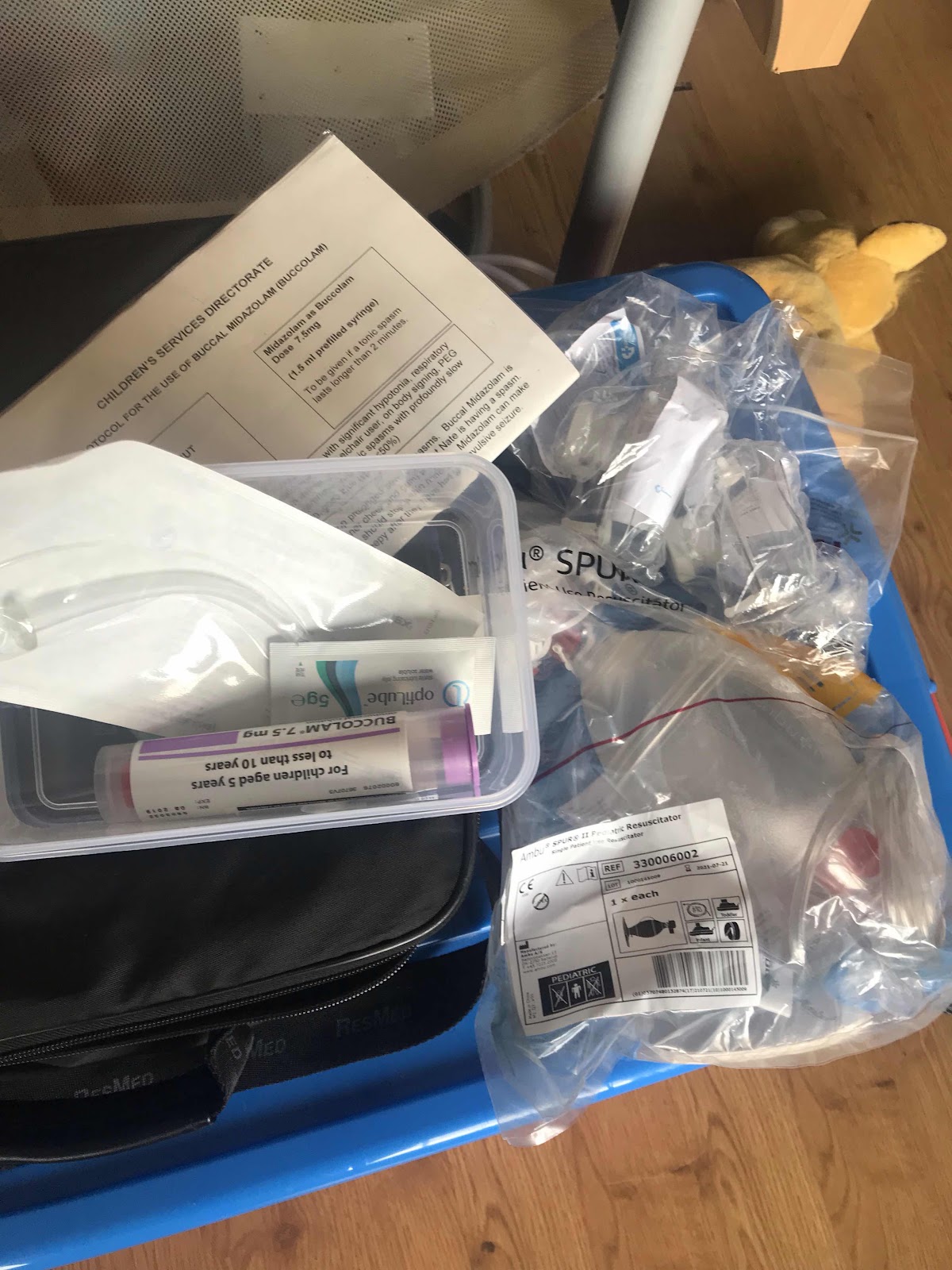
Last month Nate had another of his ”funny” turns. It was just before school while waited for the taxi. He was fast asleep, still on his BIPAP. I pottered around tidying, shouting at the dog as I nearly fell over him, and then into Nate’s room with his wheelchair, ready to to put on his AFOs and shoes, and hoist him into his chair. Nate was in a very deep sleep, his heart rate had dropped to the high 50s- something it does, and something that can be the only warning we have that Nate may have a dodgy episode. His oxygen sats alarm started blaring and at the time I thought that it was a nuisance alarm due to my battle getting Nate’s right foot in his AFO. However it didn't stop, and when I looked at the monitor the oxygen readings were 62 and still dropping. The trace on the screen was perfect- meaning it was an accurate reading. I gave Nate a prod, a wiggle and a shout to try and bring him around and reached for his emergency meds. By this time his oxygen sats were at 32 and he was what can be best described as a similar colour to Veruca Salt when she's ”gone a bit blueberry” in Charlie and the Chocolate Factory. The batplan from the hospital (formulated in clinical surroundings) was to try and avoid using the NPA and instead give midazolam and change the programme on his ventilator to a new untested emergency setting” to see if that would ”work” without having to use the airway. A blue child and horrendous sats in your own home when you're alone kind of limits what you manage to do. I think I went on autopilot and subconsciously selected what I thought had the best chance of success based on previous experience. So I gave midazolam, which didn't seem to work very quickly (but with the amount of secretions in his mouth I’m not sure how much was absorbed), used the NPA, put his ventilator back on to breathe for him, and rang 999. Nate’s sats gradually started to increase while I dialed the operator and my voice broke as I gave her all the information she needed. Thank you lovely lady. That phone call never seems to get easier. By the time the paramedics arrived Nate was asleep and doing ok. Me not so much. We transferred to hospital and stayed until he woke from the midazolam and once it was established he we clearly absolutely fine we went home. 


In A and E I was met by a barrage of questions, many I simply couldn't answer. By myself I had no idea how long things had gone on for and truthfully I think I was in a little bit of shock. What I did know, however, was that this was the longest episode Nate has ever had. It was the first daytime episode and also it had happened not long before he should have been in the taxi going to school. 

Transporting Nate to school safely then became a problem. Neither myself nor Michael could drive and watch him adequately and local authority transport could not provide anyone to manage these medical needs. Their escorts are just someone to sit with our children not intervene as we would need them to do. For the last month we have relied on the support of Nate’s school and family to get him there. Running ourselves ragged in the process. Transport passed us over to continuing care who would look to increase our personal budget at panel but we would still need to find people to go on the taxi with him as our care agency couldn't provide such a role. Our local authority will provide transport for Nate but not keep him safe on it... It doesn't make any sense. Suggestions from health and social care were to recruit to the role, but I think that unless you already know someone suitable then identifying and employing someone appropriate for a few hours a day is quite tricky, and that's another pressure on us. Added to the number of phone calls and emails we've both been making. Luckily family and friends have stepped in and are now trained and able to travel with Nate, but they really they shouldn't have to. Nate’s new emergency care plan will now detail a plan for if Nate isn't on his ventilator when an episode happens- midazolam, bag and mask with oxygen. So we have finally made some progress after chasing people for the last few weeks. I have to say that all health professionals involved have been helpful and supportive, as has our new social worker, but even so everything takes so long. 

Six more weeks until the end of term and then a rest. 
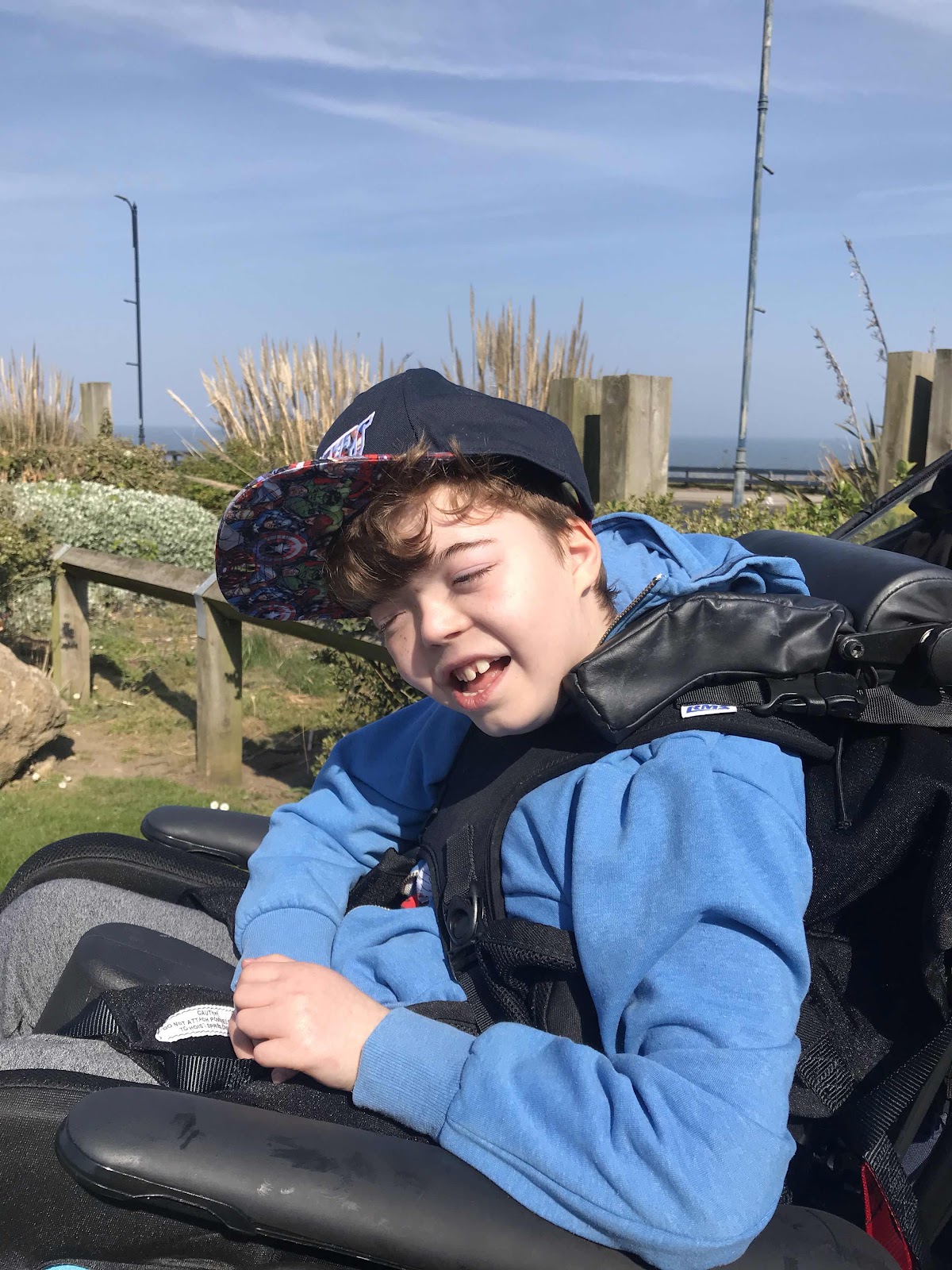
Well as much rest as you get with an almost teenager and a fantastic but medically complex young man.
So if you've seen me lately I will have either rambled on to you about utter shit, or actively avoided any conversation at all. Apologies for that. 


Saturday, 20 April 2019

A spring ”not shit” post

So as you know lots of things haven't been going very well lately which has put me in a really low mood. I tend to fixate on issues at times like this and I find it difficult to focus on much else. With respect to this blog it means I keep forgetting to share all that's good in our utterly chaotic life. 

To the outsider our life might seem (at times) to be various combinations of the following: stressful, sad, exhausting and anxiety-triggering. And it is, oh it is, but that's not all it is. 

School holidays can be a bit of an arse. Nate is quite often ill, I'm knackered from work and caring, and there's a real lack of things to do. However Nate having some well days has reminded me of the other side of the complex needs life equation ( well for the last few days that is) where life has been funny, hopeful, ridiculous and full of smiles. Yes there may have been at least one ”prison shower” for Nate, and every member of this household has wound me up at times, and yes we still have no respite and no sight of any on the horizon, but ah, I've enjoyed it. 
#notshit
#notcompletelyshitanyway


Sunday, 14 April 2019

Weighing up risk

Living with a child who has complex medical needs can make ordinarily simple decisions quite  tricky. Having tea out, a day trip, or going to a cup final can throw up all sorts of “issues” to carefully negotiate: toileting, feeding, and access being the most obvious. However, if your child is going through a period of ill ( or ill-er) health, and you can’t work out ( even after eight years) how ill they actually are, well, decision making proves even more challenging. 

I’d like to say my spidey senses were tingling when we made no plans for these Easter holidays, but I’d be lying. Truthfully I just wanted to chill a bit ( bahahaha what’s that again?) and not have to rush about every day. I’m not sure if you’ve noticed but medically complex kids like to pick the holidays to be ill, and Nate has certainly joined in with this trend. Most of his symptoms are fairly innocuous: higher heart rate, lower sats, coughing, slightly raised temperature at times, and now not tolerating even his jej feeds. He isn’t smiling or using his voice. He hasn’t been “right” for over a week. It could be something or nothing and we are hesitant to go to hospital when we can manage all of these symptoms at home. Should he get worse or not show signs of improvement then it would be an automatic trip over.

 Nate is asleep as I write this after being a bit dodgy this morning, and how he presents when he wakes will determine if we make the trip to hospital or not. His heart rate has come down and his oxygen saturations are now up so we will let him sleep as long as he needs. None of this is new but it can be impossible to predict in which direction his health will go. 

As families, we tend to sit in two initially distinct camps. Over time we move between camps, and there is much camp crossover and camp ”mergement”.

The first involves sacking everything off to focus on your sick child. You cancel plans with friends and family, you stay home and you watch. I think we all start off doing this, but it’s not sustainable. Over time you learn to determine on their own unique ”illness scale” what you can get away with as a family and act accordingly. Over time this stage will be returned to numerous times and the trick is to know when it is necessary; we certainly don’t want to be in this camp more than we need to. That’s not to say I don’t know families who permanently live here due to the severity of their child’s needs, their life expectancy, or families who feel this is what works for them. 

The second camp involves much risk management ( another “skill” to add to the parent/ carer list?). Periods of risk-taking involve trying to live as normally as you can.

 It could mean battling to stay out of hospital over Christmas, managing their health needs at home for the good of the whole family, and to make memories. 

“Abandoning” your poorly youngest child to the care of nurses and play workers in hospital in order to catch your eldest in their first nativity. 

It could mean braving trips away together as a family, going on those holidays so many people take for granted even though you know you will rely on emergency services and hospitals who don’t know them well to do their best if needed.

Having a day out even though your ill child is asleep and you aren’t quite sure what’s up, but you’ve already worked out the quickest way to the nearest hospital. 

Watching your eldest in a netball tournament while your youngest is full of snot and unhappy knowing people might wonder at your logic in bringing him along when the alternative would be you and her missing out. 

Watching your eldest in a football final armed with suction, oxygen and ventilator “just in case” because selfishly you weren’t going to miss it unless you really really had to. Because these things matter and your nearly nine-year risk management course said you could get away with it. As your daughter’s biggest supporter (even looking like shite) your son should get to see her play like a fucking star. 

The truth is that for our children quality of life is what matters. Family life matters. And inside my dark and twisted soul I can’t help but think if that family holiday, that trip out together, that goal, is the last thing we see or do together as a family, you know what, that’s OK ( well not OK, but you know what I mean). 

*Tries to look for and book a holiday... and bottles it* 


​


Wednesday, 27 February 2019

Our rare reality

Today is Rare Disease Day. The aim of which is to raise awareness amongst the general public and decision makers about rare diseases and their impact on patients’ lives. 

After living without a diagnosis for so long we understood that when (if) Nate did receive a diagnosis it would be something a bit on the rare side. I somewhat naively assumed the diagnosis would come with facts, support, and suggestions about treatment and management. This Rare Disease Day the focus is on “the rare reality” and the reality is I was quite wrong.  

When Nate was diagnosed with ATRX there were approximately 200 documented cases worldwide. That number is probably nearer 300 now, but the world is a big place and that’s still a very small number. We are lucky to have the support of a lively ATRX community on Facebook and the ATRX Foundation in the Netherlands. 

All of the families are facing their own challenges with ATRX. Young people and adults with this condition vary considerably in their level and type of need. Men and boys with less physical or medical symptoms often have severe mental health battles. We have young people with every symptom associated with ATRX, but also a larger group of youngsters diagnosed with a much milder version of the syndrome. In stark contrast the community has lost children and adults to the health problems this condition brings. Nate sits at the severe end of the ATRX spectrum with his multitude of medical issues and PMLD. What we all have in common, however, is dealing with the unpredictability of the syndrome which likes to throw up new and unexpected issues. Each symptom in itself can be difficult to manage, and while medical issues such as gastro pain are well documented, there is often no clear treatment path after more obvious solutions such as reflux medication have been tried. I’ve blogged before of Nate’s horrendous gastro pain and at one point we were referred to palliative care at another hospital in an attempt to “manage” it after his own gastroenterologist had run out of ideas. Within the complex community it isn’t uncommon for medications to be used outside of their licence in an attempt to treat symptoms that don’t fall under their list of primary uses. Using medications in this way will usually mean prescriptions from hospitals in addition to those you request via your GP. Much time is spent ringing for and collecting medications. Nothing runs out around the same time... it’s a right faff on. 

ATRX syndrome is an X linked condition. This means females can carry the gene without being affected, however all boys with the faulty ATRX gene on their X chromosome would have the condition ( due to having only one X chromosome). Method of inheritance seemed quite cut and dried. I am a carrier of the condition and so any boy I conceived would have a 50% of having the condition, and any girl would have a 50% chance of carrying the condition. ATRX is very rare, however more cases are being recognised and documented due to advances in genetic testing and as a result it has become apparent that the inheritance of the condition is more complex that it initially seemed ( or at least was explained). Because we genetic females have 2 X chromosomes if a faulty ATRX gene is present on one X chromosome we usually have a healthy back up in the other. If there is an issue with the usually healthy X chromosome then girls can have ATRX syndrome and show symptoms of the condition. In addition to this the emerging evidence of mosaicism within the syndrome ( where a genetic fault is not present in all body cells only the sex cells) both males and females could carry the condition and genetic testing using blood would not show it. In these really really really rare cases a male could be unaffected but pass on carrier status to his daughters. 

So what does and doesn’t work for rare individuals and their families? 

Consistency and transitions 
Nate has had the same paediatrician, neurologist and respiratory consultants since birth. Due to his frequent hospital stays some young doctors we knew on wards have now been added to his every growing team of consultants. They’ve all seen him at his worst but also when happy and well. Understanding how much Nate enjoys his life is vital for those treating him. Medically on paper he sounds like he has a shitty time of it, and he really doesn’t. These professionals get a pass on saying “children like Nate” as although they are talking from their vast experience and not another ATRX er, they certainly aren’t talking out of their arse ( unlike many people we have come across over the years). 
Consistency means that they know me too and they know that if I contact them worried it’s REALLY something to worry about. In contrast we have been through 4 or 5 social workers which is pretty unhelpful. They have such large caseloads that it takes time for them to grasp the issues we need them to tackle. Consistency means not having to retell the last 8 1/2 years for the millionth time. Lack of consistency leaves gaping holes in communication between the multitude of professionals involved with our family leading to errors in their understanding of situations and delays in funding and provision. 

GPs! We terrify them. I have been asked why I’ve brought Nate to see them and not just taken him to hospital. Or they’ve simply sent me straight up. I asked a GP to listen to Nate’s chest once as he had a cold and cough and I wanted reassurance. The doctor asked “ does he have breathing problems?” Bahahahahaha just a few. This was his named GP, lead on the practice, and he then asked me if I thought he needed antibiotics. When Nate reaches adulthood ( crosses fingers) his GP will take over his medical care. I can’t see that going well. There needs to be some sort of commonsensical planning to enable GPs to familiarise themselves with these young people over time. 

Honesty
It used to frustrate me to be told things like “ we don’t know” but actually honesty is the best policy. Out of your depth? Just say so followed by doing your best and/ or passing us on. 

A flexible approach
Everything needs to be flexible. Employers employ parents of rare kids and they need the flexibility to attend a multitude of appointments and hospital admissions. 
Schools need to be understanding of absences and that health within school will fluctuate. Staff need to be trained and confident on any health needs. They need to understand and respond to often very subtle communications. With many rare conditions progress developmentally can be excruciatingly slow, may regress, or plateau. We want you to never give up but balance this with realistic expectations. What works for one child may not work for ours no matter how similar they appear. Making progress is great but actually, for me, enjoying his life and time at school is equally important ( sometimes more so). 

Timescales 
For the love of God ring me back! If you say you are looking into something, or testing for something GET IN CONTACT! Waiting for results is painful. Waiting for any phone call is pretty painful to be honest and many parents have considerable justifiable anxiety around this sort of thing. If you’ve not been able to do something, need more time, or are yourself waiting JUST LET ME KNOW. It takes minutes to ping off an email. If someone says “ you will hear in 2 weeks” you can guarantee this parent will be banging on your door once that time is up. Much of the time we act as our child’s PA, making appointments, taking phone calls, writing emails, and chasing things up. The chasing bit drives me crackers. 

Sharing information
On diagnosis the first thing any parent does is hammer google. With extremely rare conditions research into treatment can be sparse and what is documented about a condition can be highly generalised. There seems to be no one checking and feeding back to parents about publications regarding rare conditions. Within our ATRX group parents share anything they find, but surely there’s a better way to keep everyone up to date with international developments? I would want to receive notifications when anything about ATRX was published, or about any ongoing research we could be involved in. 

Be willing to try 
Think outside of the box. Look into new treatment and therapy. Try to help Nate and us. 

Final thought for the day- you will probably have never heard of ATRX syndrome but neither has any professional we have ever met. 


Wednesday, 23 January 2019

A batplan

I met this week with the team who know my son best. There was no mention of the “T” word, and I left feeling less like a neurotic parent with unrealistic expectations than I had done the previous week. 

It was clear that my son’s respiratory consultant was prepared and willing to assist in any training needs, and wanted to support us in any way he could. We trust him. He’s told us some terrible things over the years, and is always ecstatic to be proved wrong. The team acknowledge that Nate does his own thing. He has never responded in expected ways that follow the “norm” and they accept that. They have always been willing to think outside of the box, which is exactly what we need. 

So if we think about the plan itself (which is being written up)
- Nate is getting a new ventilator that will have an additional “emergency” setting with increased pressures that his consultant feels  positive will be able to ventilate him during these scary blue episodes. 
- We will administer 5mg of midazolam and call an ambulance 
- We will use an NPA if necessary 

We hope this will be sufficient to keep alive. He will not return to respite until it can be shown that the emergency pressures and/ or midazolam are enough. 

What I took from the meeting is that my concerns about midazolam were sensible, and that my expectations that people would be trained to use an NPA, were, in fact, reasonable. Midazolam could cause Nate’s respiratory system to struggle but this would be something that we wouldn’t know until another event takes place. We could do a “test” and administer the drug under controlled conditions in hospital while my son was asleep, but that wouldn’t accurately replicate an event while he was in spasm in an extremely deep sleep. Therefore I agreed to wait for the next event at home and treat accordingly. 

“ Did you think you would lose him” my son’s consultant asked. “ BLEUGH” said my brain as it pretended he hadn’t said anything at all. 


Wednesday, 16 January 2019

Can open, worms everywhere

So we had our care team meeting today. Good turn out actually which was appreciated. I’m pretty sure my voice only wobbled the once- a massive fucking achievement if I’m honest. 

I didn’t sleep very well last night as I had a really odd dream that involved fluid on my lungs which I couldn’t cough up but could see through special glasses. Best not over analyse that I suppose...

To give a brief summary of the meeting:
- We will look at alternatives to using an NPA, however the airway may remain part of Nate’s emergency plan. 
- Nate really needs to have another “episode” to establish whether or not the alternative plan works
- If a non NPA plan is successful Nate will be able to return to his current respite placement 
- In the meantime we will explore a return to the hospice, however said hospice now has a waiting list so this will take some time and there’s no guarantee we will feel happy for him to return there.
- We will look at booking in more overnight care ( we have a personal budget and so long as the care agency has capacity we will book in more care).
- The personal budget amount will not be altered until the situation has been resolved. 

One unexpected outcome of the discussion was the query around his education. No one in school is able ( allowed) to put in an NPA and so this throws up questions around keeping him safe in school. Luckily we had several sensible voices present who complied a flow chart/ action plan which could be implemented once signed off by medics enabling Nate’s educational placement to continue. I’m not going to lie, I wasn’t expecting that massive spanner in the works. Can open, worms everywhere. 

I still don’t “get” the issue with NPAs, but I can see from my fellow SN parents of medical children that similar issues are nationwide and actually we have it “good” (relatively speaking). 

So we are now without respite. 

I would like to thank everyone for the supportive messages to my previous post, and send my own support to those managing without respite because they don’t trust anyone with their child, or who haven’t any due to not meeting the picky criteria to qualify for it. What I don’t appreciate is comments along the lines of that they would never consider putting their child in someone else’s care and they certainly wouldn’t in my position, or we should consider ourselves lucky to have qualified for respite in the first place. This isn’t a fucking game of who has things worse, also hospice respite criteria isn’t one you want to meet. I absolutely support my fellow SN parents who are going through shit. If you don’t need or want respite that’s ok. If you don’t qualify for help that’s fucking shit- let me know if I can help. As you all know I do enjoy a radgy email or social media tirade. But please do not judge me for the want and need for it. If I’m honest I had a complete breakdown in 2012. I left my job to care for Nate, we lost our house and car, and we declared bankruptcy. Nate was in and out of hospital and really quite ill. Respite helped us fight our way back from the brink. I will absolutely talk about what we have been through as a family as it’s all part of who we are, and where we are today. My son’s medical needs to us seem day to day, and to be fair I am quite blasé about it all, but as his paediatrician does point out frequently we do well keeping him alive and well. 

Without respite I worry I will burn out. Or Michael will. Or we both will. 

Without alternatives to using an NPA that we know will work and won’t cause respiratory problems (or do cause respiratory problems but are managable and don’t require an NPA) we are left without any options of who could care for Nate. 

We can never get ill. We can never die. It’s back to never travelling together like the US president and VP I suppose...  


Saturday, 12 January 2019

Out of the blue

We saw the new year in subdued and quiet. The wine was put down and the false smiles were stuck firmly to our faces. Nate was in bed early after a busy day and went into a very deep sleep, which was reflected by a heart rate in the 50s. A few hours later and his oxygen saturations started to drop. The alarms are set to beep aggressively at 85% and it’s at that point we entered his room. But the numbers just kept falling. We tried to wake him, prodding and poking at his podgy chest but he was stiff, legs stretched out and arms clutched tightly to his chest. So tight is the spasm or seizure that no air can enter his body, even pushed through by his ventilator.  We can’t open his jaw and airway as everything is clamped shut. The last time this happened ( which was a long time ago now, a year or two at least) we were given an ambubag, a nasopharyngeal airway ( NPA) and midazolam. All things to try with no guarantee of success. At 49% oxygen saturations I placed the NPA and the ventilator could to do its work- breathing for him for as long as the event lasted. This was the first time we had used the airway with Nate and in such severe spasm both his drs and ourselves were unsure if we could get it in. But we did, and it worked, and so needs to be part of Nate’s emergency plan... but here we hit a hurdle... Nate’s current respite placement are not prepared to use the NPA. Yes the midazolam may work too, but in a child with crappy breathing a rescue dose might end the episode but compromise his breathing and lead to the need to use an NPA anyway. Yes they (and we) would also call an ambulance, but how quickly would they get there? These events are few and far between but clearly they are still a huge risk to Nate. 

This also poses a greater issue than the potential loss of respite. If the provider will not allow non healthcare staff to use a bendy plastic tube in an emergency situation then my son cannot live within the varied services that it provides. I can’t bring myself to think very far ahead with Nate but I always considered his respite provider as our “back up” should anything happen to us. He was settled and had staff who knew him well. If one or both of us had an accident or became ill (or simply could no longer cope) I saw them as a route of support more than a few days respite per month. But my plan has snagged on a massive scale. Where now can care for Nate? We are due meet with everyone concerned with Nate’s care next week but unless an alternative life saving measure can be thought of, or they change their mind of course, he won’t be able to return to respite. I’m waiting for his paediatrician to return my call in the hope she will have something helpful to suggest. 

I feel so sad about it. It was a long process to change respite when you consider assessment, funding, recruitment, training, and getting to know my son. Nate loves going. It’s a bright and lively place. But the “medical stuff” was always going to be the tricky bit in the placement. If it ends, as I think it will, I have no hard feelings. I could shout and stamp a bit. I could push for them to use the device. But do I really want to put Nate’s life in the hands of people who do not want that responsibility? They were clear from the offset about not being a medical establishment and that should Nate’s needs change they might be unable to continue with their provision for him, but what options are there for the more “medical” kids and young people? 
Not many 
Although we are now capable of keeping some of our most medically vulnerable young people alive longer and with a good quality of life, community services and our society itself has yet to catch up. Schools struggle to cater for severe medical needs, hospices have strict criteria, and other respite provisions have medical lines they will not cross. Many residential services lack experience, young adults in their own homes see a huge turnover of staff and the problems that brings with it. Then there’s the OTs and physios and social workers with huge case loads. The vague or top secret criteria. The not offering help until you are broken. The lies by omission. The guarded pots of insufficient funds. 

Our young people have value, they have worth. They should have options.